
Read/Watched/Listened/Ate
21: May 2026

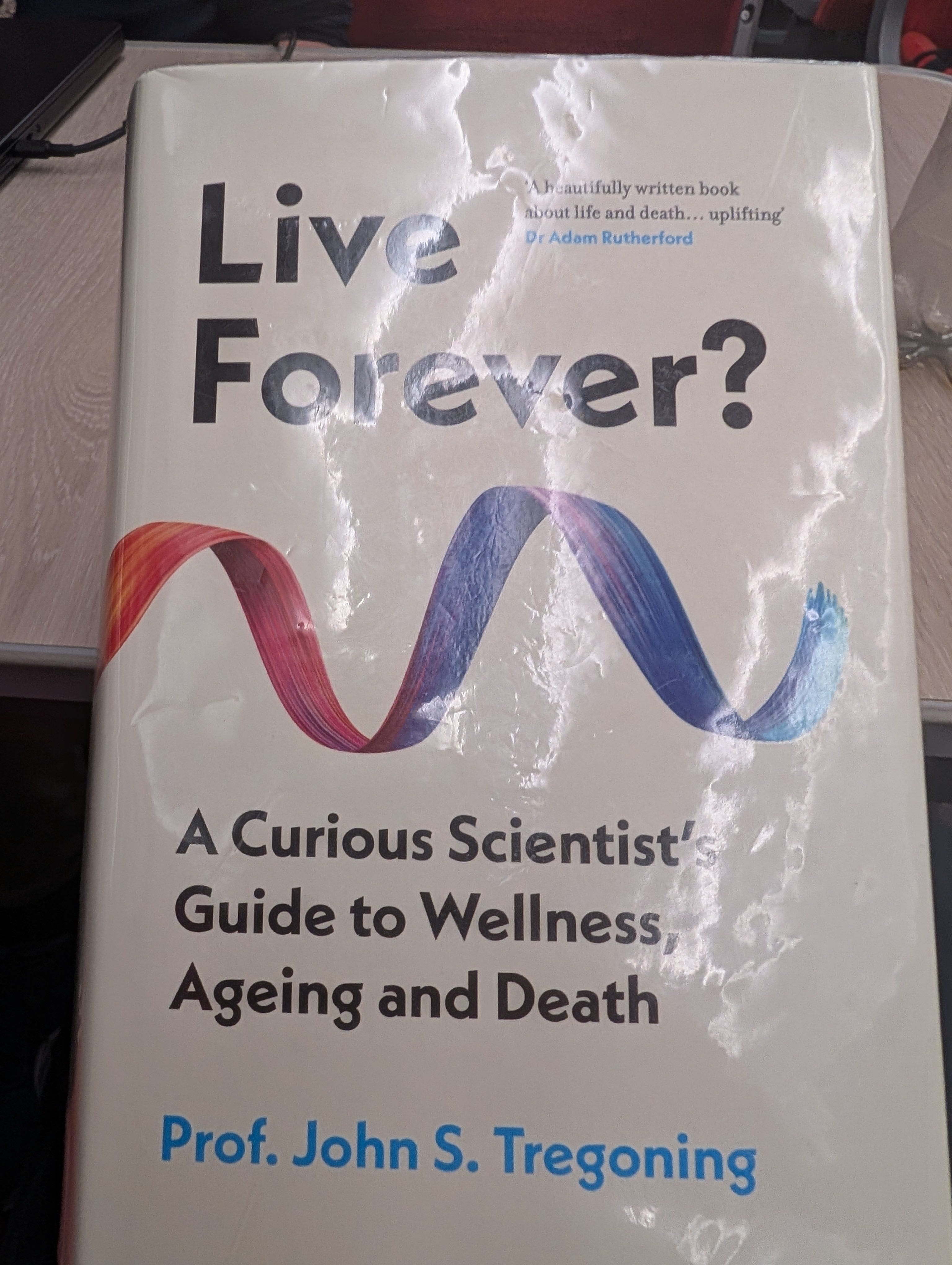
Book: Last week I read Live Forever? by John S Tregoning, a guide to the most common sources of death in Western societies, non-communicable diseases like heart disease, cancer, diabetes, dementia. Despite the morbid subject matter, its a breezy and informative read, lots of dad jokes, kind of Bill Bryson-esque. There’s lots of stuff I half-remembered from school biology or words I sort of understood but not really (probably not a great admission from someone who has worked as much on public health topics as me, but reassuringly Tregoning seemed to be learning a lot too, despite his day job as an immunologist). Despite being sold as ‘nutty professor tries a bunch of fad diets and regimens’, the experimentation in the book is a little lame, as are the answers Tregoning discovers to the question of how to live longer. Don’t smoke, don’t drink much, eat a healthy diet, exercise and sleep. Oh, and if you’re a man, ejaculate 20 times a month (associated with lower prostate cancer risk…though I’m not sure how robust the evidence is that this is a causal relationship).
Film: I watched Is this thing on?, starring Will Arnett and Laura Dern in a Bradley Cooper-directed John Bishop biopic - which is just a deeply weird set of words to put together in a sentence. Unfortunately the movie didn’t live up to it - kind of slow, not that funny (unclear how far the stand up routines were deliberately bad), people just weeping every ten minutes in lieu of character development. Bit of a Marriage Story vibe, but more boring.
Article: Stop looking for Burnhamism - in six years, I’ve never found it by Joshi Herrman (The Mill). Well, last week I asked for deeper accounts of Andy Burnham’s time as Manchester mayor and what it says about his aptitude to be Prime Minister, and lo! Here is exactly what I was after. There’s certainly stuff that’s concerning here: Burnham’s lack of ideological clarity, a reluctance to make tough choices or upset people, a preference for symbolic gestures over nitty-gritty detail. While his positivity and optimism is a strength, he seems to have a tendency to believe his own hype, which prevents him from spotting problems. Herrman thinks his skills are well suited to being mayor of Manchester - he is a good face and figurehead - but less appropriate for a Prime Minister, and the daily grind of gnarly trade-offs. That seems very plausible. But I think there are a couple of encouraging things in the profile too. Burnham’s recognition of rough sleeping and buses as two issues he could own and make progress on reflects a level of strategy and prioritisation that would be an improvement from the current administration in my view. More fundamentally, there are hints of humility (alongside considerable ego, like most politicians) and pragmatism. According to Diane Coyle, Burnham is a “good listener”, who is “very self-aware about not being a policy wonk himself”. There are many different ways to be a good PM - the job asks for more things than any one person can give. Like any leadership role, I think the critical thing is self-knowledge: understanding your limitations and delegating to others who can cover them. If Burnham can do that, he could just be effective in Number 10.
Podcast: Breaking the Old Firm: Fergie’s Aberdeen Revolution (It Was What It Was). One of the great things about being a football fan is the sliver of recognition you get when you meet someone from a place with a team you’ve heard of. Like, I don’t know, Karlsruhe: I should probably associate them with the German Constitutional Court; in fact, I remember they were in the Bundesliga in the 1990s. My hometown, Aberdeen, ought to be a place like that: not only is it where Alex Ferguson made his name, it is (alas) the last team to win the Scottish league other than Rangers or Celtic, and (alas) the last team to beat Real Madrid in a European final. More people, in my opinion, should know about this. So I enjoyed Jonathan Wilson and Rob Draper’s interview with Michael Grant about Ferguson’s gilded period in the North East of Scotland. And I learned a bit from it too: not least that Ferguson dismissively referred to a troublesome clique of his players as the “Westhill willy-biters” (this is extra funny if you have a sense of Westhill, an innocuous suburb of the city).
Food: The podcast was apt becayuse I was back in Aberdeen last weekend, seeing my father, enjoying better cooking. And that means Bengali home comforts: masoor dal (red lentils), jhinge posto (ridge gourd - a slightly bitter tastier relative of the cucumber cooked in a nutty, spicy poppy seed paste, an absolute favourite of mine), potoler dalna (another type of gourd, this one “pointed”) and lal shak (amaranthus, literally red spinach - more of a novelty).
Honestly the male orgasm–lifespan correlation would still be shocking to me even if it was purely correlational, assuming there's control for sex vs masturbation. Sex, sure, lots of non-causal reasons that correlates with lifespan (not least of all mate choice!!), but I certainly would not have imagined that masturbating every other day or even more frequently than that is correlated with good health outcomes. (I finish typing this and I wonder if maybe the science is so bad they didn't even do this extremely rudimentary control.)