
Read/Watched/Listened/Ate
2: January 2026

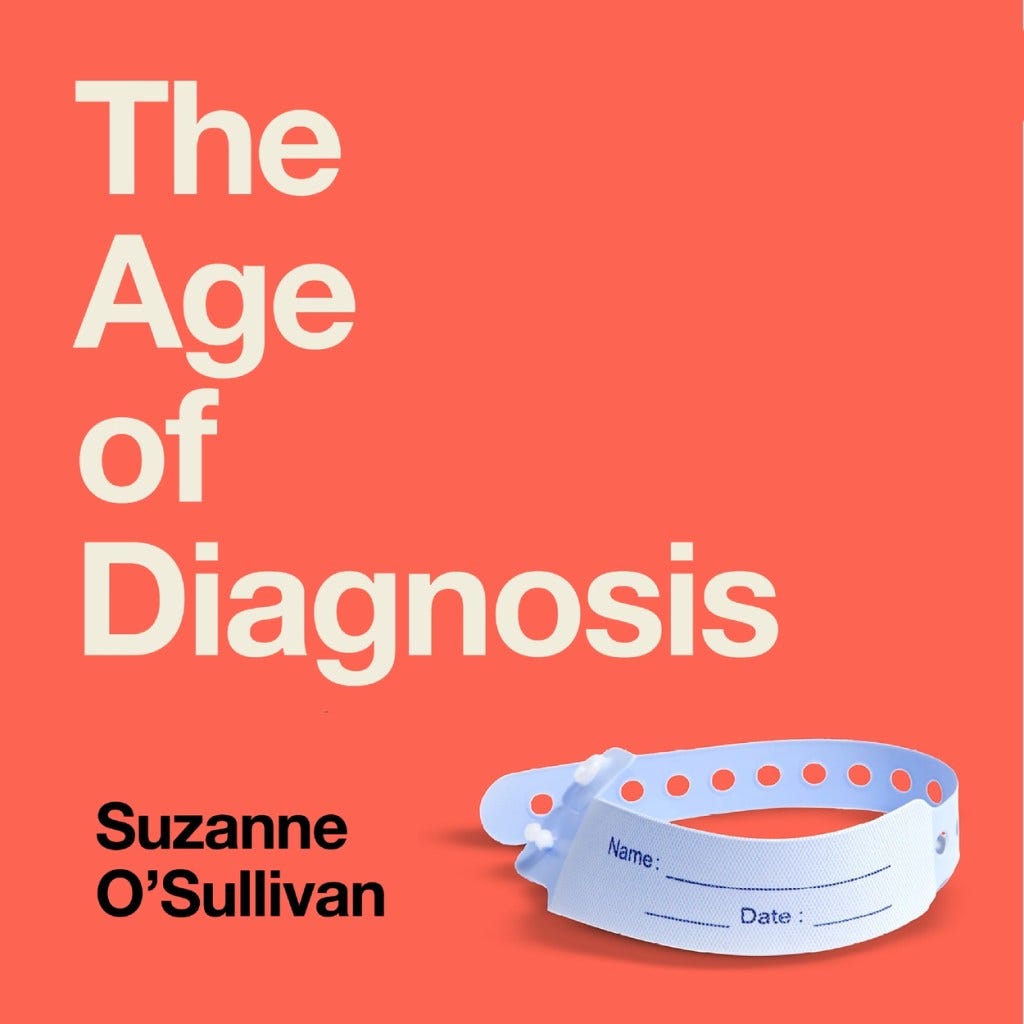
Book: Last week I read The Age of Diagnosis by Suzanne O’Sullivan. I was pretty persuaded by the core claims about excessive use of diagnostic tests leading to over-medicalisation. Overall, I thought the book was careful and sensitive, giving people space to demonstrate the confusions and contradictions of their own views rather than confronting her opponents directly. It was strong on the dangers of identifying oneself too closely with a condition, and the ways in which our expectations around health can be reinforcing. The ultimate message about the imprecision and fallibility of medicine is rather alarming, but a necessary one to moderate unrealistic expectations.
Articles: I didn’t exactly agree with Jason Blakely’s Harper’s piece, In the Land of Data Blind, exploring the difficulties the discipline of political science has had analysing and making sense of Donald Trump, but I found it instructively challenging. According to Blakley, the approach of trying to use data and formal modeling to yield a predictive science was an error, and that the ‘soft’ insights of the humanities have been neglected. I think that’s fine as far as it goes - I’m certainly not going to argue against someone saying we should pay more attention to normative philosophy, and nor do I deny the value of qualitative sociology or ethnography. But my worry is that giving up on quantification and prediction pushes us towards vibes based punditry, which is hardly in short supply.
It is fantastic, and long overdue, that British children are finally being vaccinated for free against chickenpox (though alas too late for the little bunker in my nose). It’s seemed like an obvious decision for ages, but I liked Tom Whipple’s piece in the Times, “We’ve had a chickenpox vaccine for 50 years: why only use it now”, explaining the trade-offs and uncertainty involved, given the fear the vaccine could have led to nastier adult cases of shingles. As Whipple says, “public health is hard”.
Podcast: I’ve really been enjoying Naomi Alderman’s Human Intelligence series. Bitesize profiles of thinkers, unified by a broad theme (the ones I’ve listened to are about exiles, including Karl Marx, Marie Curie and Ovid). Alderman’s enthusiasm is winning, and I love the way she grasps a feature of her subject’s personality (Marx’s tendency to chaos, Curie’s humble practicality) and brings it to life in just 15 minutes.
Food: I ate at Sen Viet in Kings Cross, via a recommendation from Vittles, and as that might indicate, it was suitably unglamorous (despite being central London). Food was reasonably good - I had a tofu banh xeo (pancake) - though I’m not willing to endorse its claim to be the best Vietnamese in London over my long-time favourite, Cay Tre.