
Read/Watched/Listened/Ate
18: May 2026

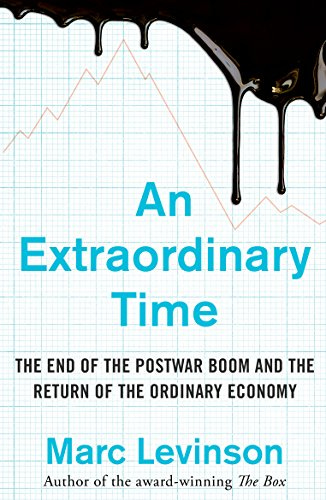
Book: Last week I re-read An Extraordinary Time by Marc Levinson, maybe my favourite work of economic history, and a book that seems particularly salient just now as we grapple with the fallout from an oil price hike occasioned by geopolitical instability in the Middle East. The book describes how 1973 was a pivotal year for the global economy, marking the shift from the postwar boom to a protracted period of crisis. Reading it from our present vantage point, the parallels are alarming and uncanny: hubristic technocrats who believed they had tamed boom and bust spiralling into panic as they find none of the old levers work; an American government undermining the global economic architecture, indifferent to the impact on the rest of the world, placing political pressure on the Federal Reserve to cut interest rates; countries running bigger and bigger deficits because they can’t raise taxes enough to cover their spending commitments; and the worst of the volatility being felt by the poorest countries. Underpinning it all, a productivity puzzle that leaves us all poorer. It’s not a reassuring book: Levinson is (rightly in my view) sceptical that there was much policymakers could do to alter the fundamentals of their economies - the dip just needed to be ridden out. But in the meantime, politicians were at the mercy of their citizens - there are alarming echoes to the “ungovernability” and political violence of the present day too, with governments struggling to form majorities, kidnaps and assassinations on the rise and independence movements in Canada and the UK. Sound familiar?
Article: My year as a degenerate gambler by McKay Coppins (Atlantic). Compelling and concerning chronicle of a journalist going above and beyond - stretching the limits of his Mormon commitments - in order to understand the reality of America’s newly liberalised sports gambling system. Describes not just the obsession, isolation, grim Vegas rooms and charlatans promising free money, but also the buzz, tantalising glimpses of success, and the seductive sense of having an edge. FPL will do fine for me, thanks.
Article (2): Are Prediction Markets Good for Anything? by Dan Schwartz (Asterisk). On the subject of gambling…a reasonably even handed discussion of the promise and perils of prediction markets from the former CTO of Metaculus. Sets out the theoretical case for why prediction markets ought to be good (risk monitoring, interpreting news, anticipating policy outcomes, accountability and novel information), and grades them against those objectives. If anything, I’d say Schwartz is a bit of a harsh marker - the sense of disappointment is palpable, but at the same time he doesn’t go deep into the harms of gambling on the other side.
Podcast: Toxic Legacy: Bonus Episode with Samantha Power (FT). Sorry, more lead content. But it was fascinating to hear the former USAID head explain how the problem of lead exposure came onto her radar, and gratifying to hear about the role my colleagues played in it. There is a lot of nonsense and misconception around effective altruism, but here, surely, is the best case for it - alerting people in positions of power to an overlooked cause of sickness and poverty.
Film: I watched The Devil Wears Prada 2, for my sins. It was bad and also boring, so I don’t have much to say about it save that Rachel Bloom was good, and I wish I could see her in more stuff again. I guess Aline Brosh McKenna should only write for her. Also, I can’t believe I watched Stanley Tucci go to Italy and not eat a single plate of pasta.