
Read/Watched/Listened/Ate
19: May 2026

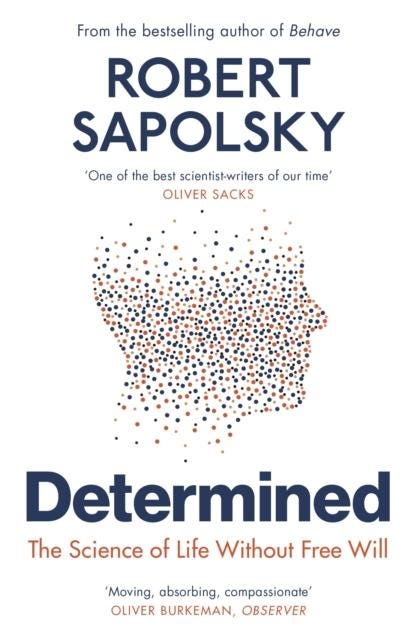
Book: Last week I read Determined by Robert Sapolsky, in which he argues that there is no free will, and that this implies “There can be no such thing as blame, and that punishment as retribution is indefensible - sure, keep dangerous people from damaging others, but do so as straightforwardly and non-judgmentally as keeping a car with faulty brakes off the road. That it can be okay to praise someone or express gratitude toward them as an instrumental intervention, to make it likely that they will repeat that behavior in the future, or as an inspiration to others, but never because they deserve it…no one has earned or is entitled to being treated better or worse than anyone else”. I don’t disagree with any of that. In fact, Sapolsky seems to struggle more with these conclusions - “even I think that taking that seriously sounds absolutely nutty” - more than I do: it feels natural and obvious to me to view the world and live that way. I share Sapolsky’s view that it is more compassionate and reasonable and better for me and the world to try and understand why people behave the way they do than to spend too much time trying to evaluate them morally. Even if you resist such a stark conclusion, it’s an entertaining and informative book. The first half covers a lot of ground in biology and social psychology, running through the various factors which determine our characters and life outcomes. But the book really gets going in the second part when it considers the moral and societal implications. Even if you don’t buy that all our actions are fully determined, you should acknowledge that much more is driven by forces outside our control than society routinely recognises. Some of the most moving and inspiring passages describe the moral progress we have made as coming to see epilepsy and schizophrenia as illness rather than curses or moral failings (though these revolutions remain incomplete). And the line keeps shifting in that direction: less moralised and more scientised. There’s little prospect of us jumping all the way to the world Sapolsky describes any time soon - he also discusses the evolutionary pleasure that humans and other creatures get from enforcing moral sanctions - but we are probably inching, frustratingly slowly, in a more humane direction.
Article: Inside Number 10: the politics behind the smoking ban by Bill Morgan (King’s Fund Blog). Informative account from Rishi Sunak’s health adviser of the reasoning behind the scenes that led the then Prime Minister to push forward with the generational smoking ban, drawing out broader political lessons for public health regulation. Bill makes his interesting case for free votes as a way to draw the sting (which raises a question of why governments don’t use free votes more often in general). But I remain a bit unsure as to why he sees the smoking ban (and public health measures more broadly) as so politically risky. It’s a pretty popular policy (two-thirds of people support it), as is often the case with public health interventions, so public opinion doesn’t seem to be the constraint. Is it controversy on the backbenches? But that was only the case for the Tories, Labour MPs have been united. The measure would have received industry pushback, but that is the case for basically any regulation. So why is Bill so adamant that “public health restrictions are deeply politically risky”? As with much of the political advice ministers receive, I think it is much too vibesy, and insufficiently grounded in actual evidence.
Music: Lately I’ve been enjoying Romanticize the Drive by Metric, the new Metric album that sounds like an old Metric album (Fantasies, to be precise), and that’s a good thing. Maybe the Millennial nostalgia is hitting me, but there’s something nice about an old band unapologetically continuing to do what they do best.
Film: Rental Family. Good premise - American actor in Japan starts working for a company that offers stand-ins for friends, family, co-workers to fill out social events (apparently a real thing!)- that doesn’t quite deliver on that promise. I was never fully drawn in emotionally. The film hints at offering a cultural analysis of Japan, but doesn’t quite get into it. And it suffers in comparison to other works that rely on similar set ups. It’s not as weird as Tom McCarthy’s book Remainder. It doesn’t have the mad scientist genius, and reflection on the human desire for control of Nathan Fielder’s TV series The Rehearsal. Meh.
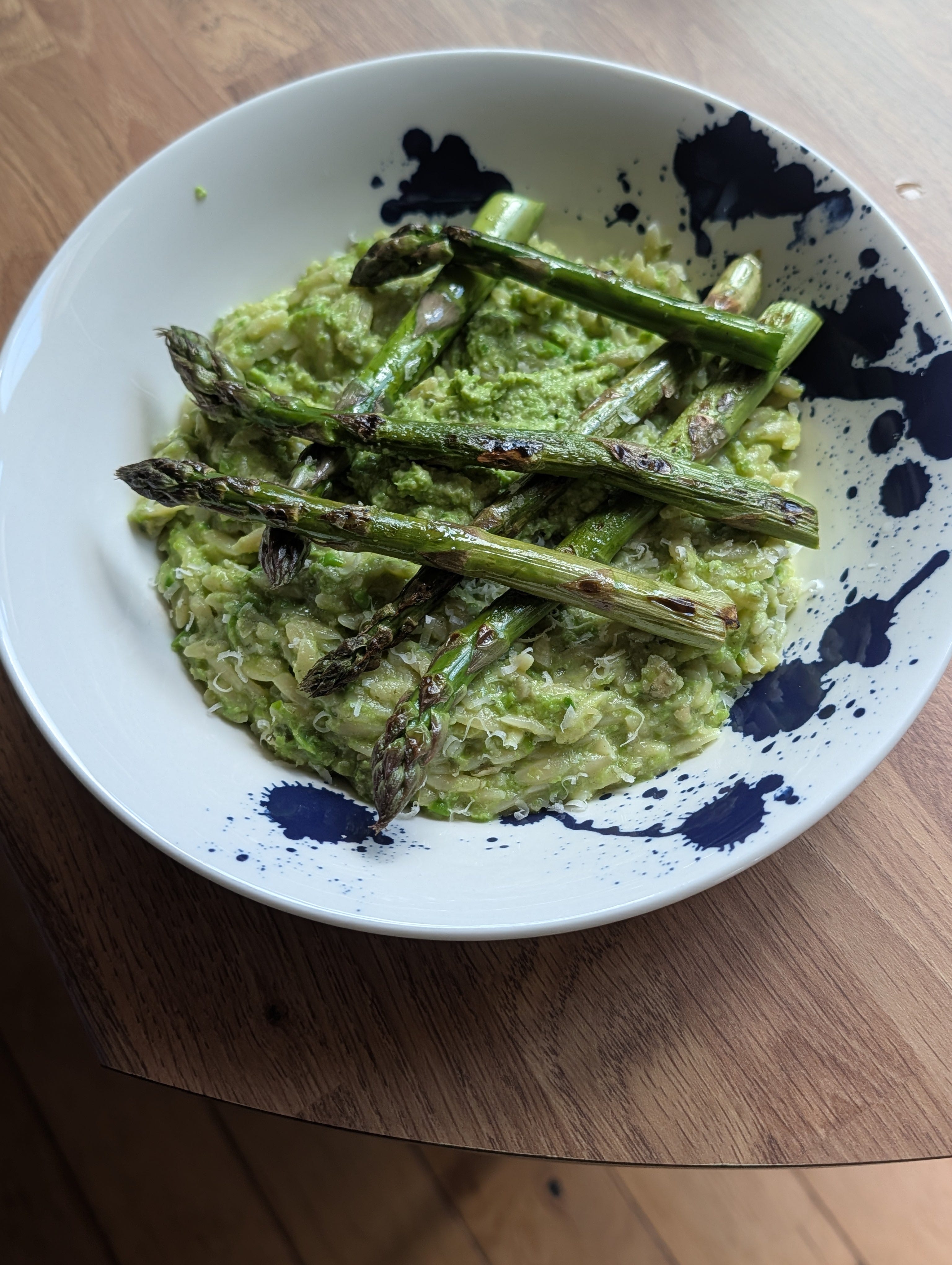
Food: Asparagus, pea and lemon orzo. Asparagus is probably the most seasonal vegetable I eat, so this was the perfect time of year to try this pasta dish, which is a zingy, verdant spring day in a bowl.
We stan for Bearded Bob Sapolsky. If you aren’t familiar with him beyond his writing, I expect you’d enjoy him in his lecture theatre: https://youtu.be/fzUXcBTQXKM?si=AQvzSsZJ7D2Z8JCx