Read/Watched/Listened/Ate
23: June 2026

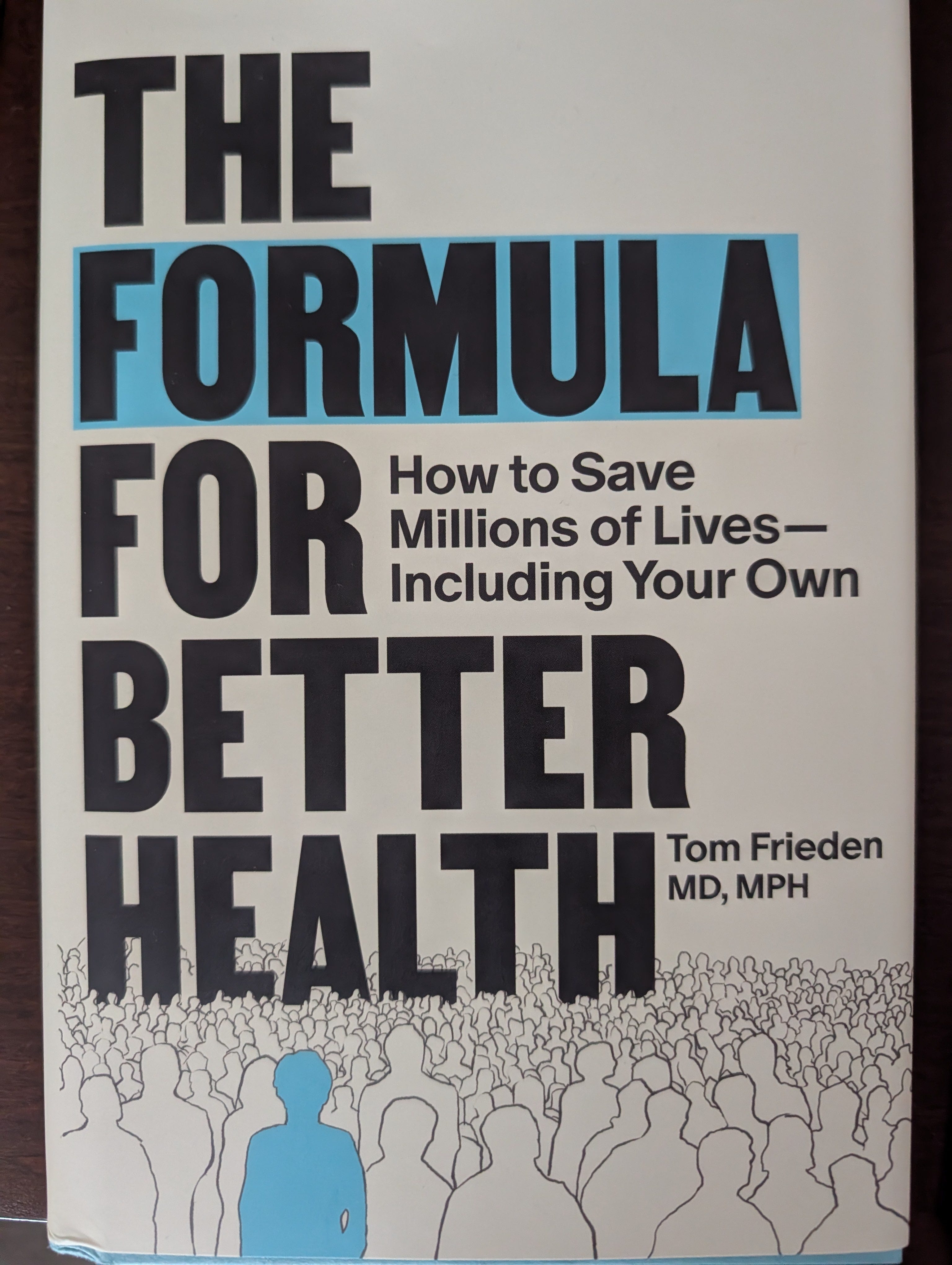
Book: Last week I read The Formula for Better Health by Tom Frieden. Tom was head of the Centers for Disease Control under Barack Obama (most famously overseeing the response to Ebola), and health commissioner in New York City under Michael Bloomberg. This book - part memoir, part manifesto - distils his accumulated wisdom from over thirty years of working in public health. Tom loves a catchy framework (ideally with an accompanying acronym: he extols the virtues of ‘technical packages’ like DOTS for tuberculosis, or HEARTS for blood pressure control), and this book is centred around the formula ‘See/Believe/Create’. The interesting implication is that figuring out what to do and implementing (the ‘Create’ part) it is not necessarily the main part of the problem when it comes to making progress on public health problems. As significant, and more easily overlooked, is ‘Seeing’ (identifying the problem and acknowledging it), and ‘Believing’ (generating the will and motivation to address the issue). I think a few years ago I would have been more sceptical of this claim. But bitter experience has demonstrated how resistant people are to acknowledging the invisible forces that drive outcomes until they are obvious. I’ve had too many conversations where people treat a ‘counterfactual’ as some sort of nefarious witchcraft, a tendency exacerbated by the populist inclination to insist that social problems must be simple and easily legible. There is a reason I love to quote Bastiat’s parable of the glazier, which urges us to attend to “that which is not seen”. But I was as compelled by the part about ‘believing’. Tom is very American - in the best way, in this context - exhibiting a can do attitude that inspires ambition and dissolves cynicism that problems that have festered for generations are inescapable. Part of what was most moving in this book were the stories, of Tom’s personal achievements on TB control, but of the various mentors and exemplars who refused to accept death and suffering and kept going with the ‘resolve to save lives’ (as Tom’s organisation is called). We would do well to honour their example.
Article: American football is bad for the brain. Football - soccer - is the beneficiary by Joey D’Urso. With the World Cup starting today, it’s a good time to sign up for Joey’s Substack, which explores the economic and social world around football. This was a typically thought provoking post, making a plausible argument that the success of football is in part down to its relative safety, involving less traumatic impact than other sports (heading aside), and thus carrying less risk of death or even severe injury.
Film: Marty Supreme. I thought this movie was fine, kind of diverting, but also fairly annoying. I found the style - big ‘80s sports movie soundtrack over a ‘50s period piece - a little distracting and pretentious. The predictable discourse over whether we’re supposed to sympathise with the main character is already tedious. It reminded me of Anora, another zany stress comedy I didn’t care for - though this is funnier and less icky. Mostly I wish the film cared more about table tennis - I think the story of a delusional chancer trying to sell the world on ping pong would have been enough without the sex and crime and absurdly heightened drama.
Podcast: OnlyFantasy (up to episode 4). The sudden and rapid growth of OnlyFans, supercharged by the pandemic, is a great premise for a podcast series. This one gets clients and performers to open up on the nature of the work and the relationships they forged. Maybe I was too cynical, but I’ve been surprised by how often performers seem to feel genuine care and affection for their clients - wanting to be a set of social training wheels rather than an emotional crutch. That said, I am conscious that the stories of people with deep and complex emotional needs are more interesting than those on the platform for sexual gratification, so there may be bias in the emphasis. Episode 4, on scams, was the best so far. There was a frank interview with a former ‘chatter’, hired to form part of a legion of stand ins pretending to be a popular performer. There was also a loathsome agency executive, arguing unconvincingly that clients fobbed off on ‘chatters’ probably know they are being deceived, that they are being saved from even less scrupulous actors, and that in any case the agency are heroes for doing something about the loneliness epidemic. It’s not a judgemental series (maybe a bit too liberal to my taste), but it does give people the rope to hang themselves.
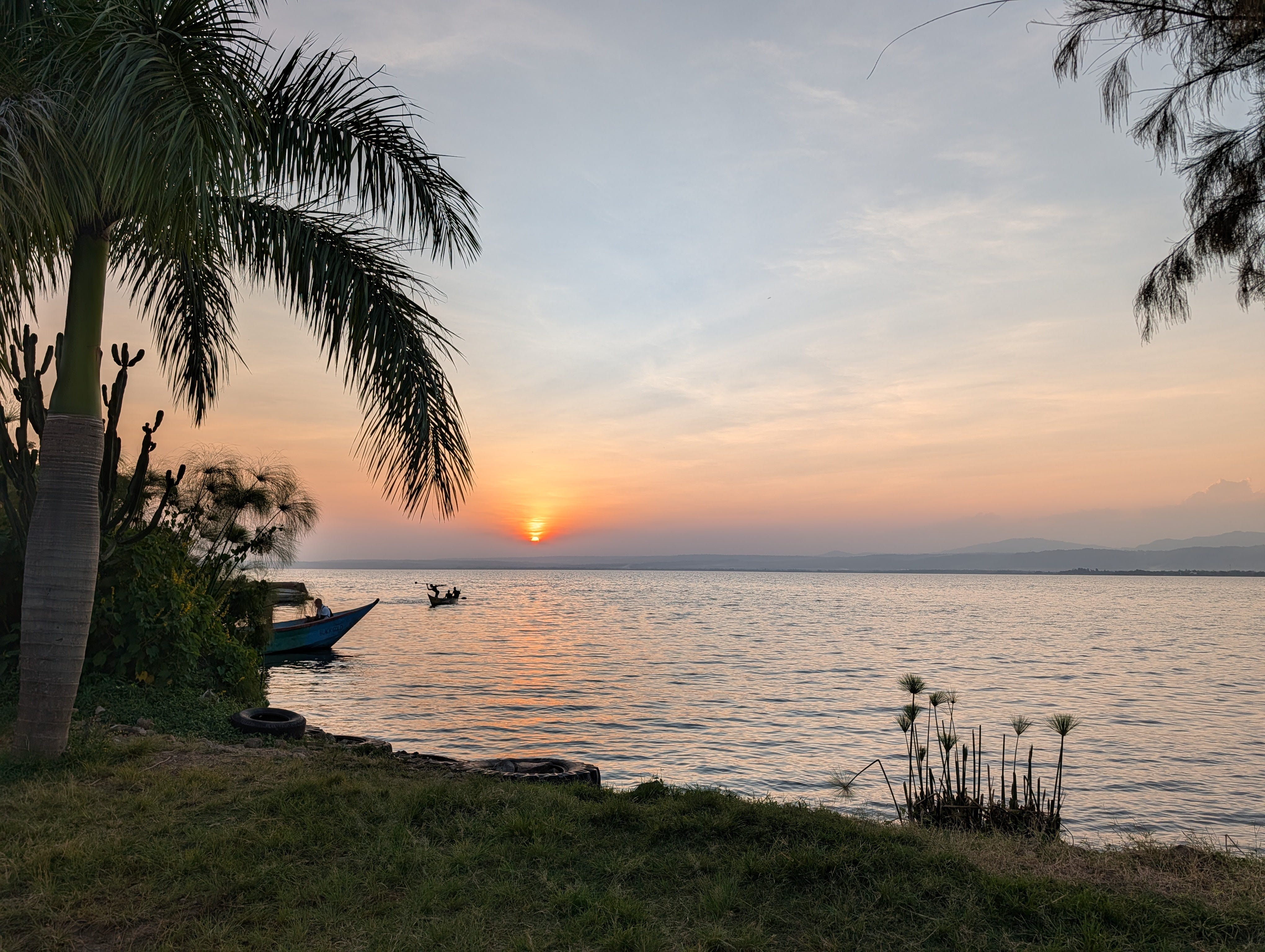
Food and Drink: I’ve been in Kenya for work the last few days, and sampled a few local delicacies, including arrowroot (very dense and starchy) and ugali (cornmeal porridge, which I enjoyed more than other people seemed to - but then I really like polenta and upma). If you’re a regular reader (or viewer of my bad photography) you will know I generally care about taste over appearance, and am not too swayed by aesthetics and ambience. However, the most remarkable experience of the week so far has been a drink at dusk at Dunga Hill Kamp, Kisumu - simply for the spectacular sunset view over Lake Victoria.